Dental Implants: Candidacy, Benefits & How They Replace Missing Teeth
Losing a tooth leaves an empty space, but the effects can go beyond appearance. Chewing may become harder, nearby teeth can shift and the jawbone in that area may gradually shrink. Dental implants offer one way to replace the missing tooth with a fixed restoration.
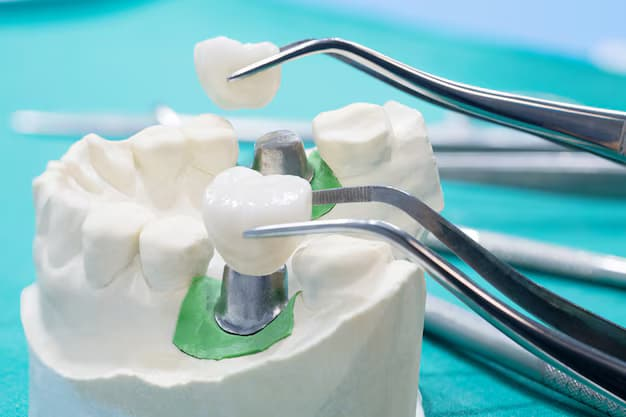
An implant is a small post placed into the jawbone. Once the area has healed, the post can support a crown, bridge or denture. Because the implant is held in the bone, the replacement can feel more secure than a removable option.
Still, implants aren't for everyone. The amount of available bone matters. So does gum health. A dentist will also consider how well you can heal and whether you have factors that could affect treatment.
Who is a good candidate for dental implants?
Dental implants can work well for people with a missing tooth but a few factors need to be checked first. Your dentist will look at the condition of your mouth, and how well you may heal after treatment.
- Enough healthy jawbone to hold the implant securely
- Healthy gums without active gum disease or inflammation
- Good healing ability after treatment
- Tooth loss caused by decay, gum disease, injury, or another dental problem
- Smoking, medical conditions, and medications that may affect healing
If there isn't enough bone, a bone graft may be recommended before implant placement.
A dental examination helps determine whether implants are suitable, and what preparation may be needed.
How do dental implants replace missing teeth?
An implant takes the place of a natural tooth root. The post is placed into the jawbone then the bone gradually grows around it and forms a firm connection. Dentists call this process osseointegration.
It isn't instant.
Implant treatment usually happens in stages. If the damaged tooth is still in place it may need to be removed first. The implant can then be placed once the area is ready. After healing, an abutment connects the implant to the final restoration.
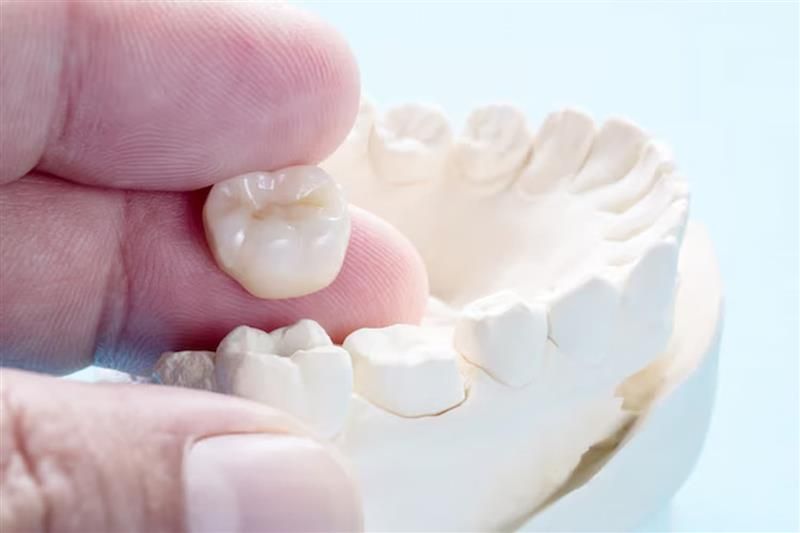
One missing tooth is often replaced with an implant-supported crown. Several missing teeth can sometimes be restored with an implant-supported bridge. For people considering dental implants for missing teeth, several implants may be used to hold a full-arch denture when most or all teeth in an arch are missing.
The number of implants needed depends on the location of the missing teeth, the available bone, the bite, and the restoration being planned.
What are the benefits of dental implants for missing teeth?
An implant can make eating easier by providing a stable replacement for a missing tooth. It can also help support the jawbone around the implant because the post takes the place of the natural tooth root.
There is another difference that matters to some patients. An implant-supported crown doesn't depend on neighboring teeth in the same way a traditional bridge does. The replacement tooth is attached to the implant.
That can make a difference when only one tooth is missing.
Implants can also stay in place while you eat and speak. With regular care, an implant may function for many years. The crown is a separate part, though and it can eventually wear or need replacement.
Results vary. Bone condition, gum health, smoking, bite forces, oral hygiene, and general health can all affect how an implant performs over time.
What should I know before getting dental implants?
Dental implant treatment involves surgery and a healing period so it may take more than one appointment. The exact process depends on the condition of the area where the tooth is missing.
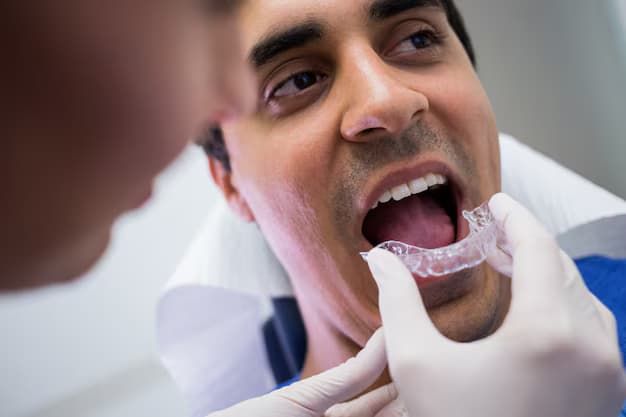
Before treatment, your dentist will check the area and may use X-rays, or three-dimensional imaging to plan the implant.
- The jawbone needs to be checked for enough support.
- The gums and nearby teeth will be examined.
- A damaged tooth may need to be removed first.
- A bone graft may be needed if there isn't enough bone.
- Healing time can add to the overall treatment schedule.
- Your dentist can explain the planned restoration and aftercare.
Knowing the treatment stages ahead of time makes planning easier. It also gives you a clearer idea of what to expect during recovery.
How long does dental implant treatment take?
A typical dental implant treatment takes 3 to 6 months, although cases involving bone grafting or additional healing may take 6 to 12 months.
Healing is a major reason.
After the implant is placed, the jawbone needs time to form a strong connection with the implant. The length of that period can depend on bone quality, the implant's location, your general health and the treatment being performed.
Some patients have enough healthy bone to receive an implant soon after a tooth is removed. Others need a bone graft first. In that situation, the graft needs time to heal before the implant can be placed.
A temporary tooth may be used during the healing period. Once the implant is stable enough, the permanent crown, or other restoration can be attached.
Are dental implants painful?
The implant procedure is performed with local anesthesia, so you shouldn't feel significant pain while the implant is being placed.
Afterward is different.
Some soreness, swelling, bruising, or tenderness can happen during the first few days. The amount of discomfort varies, and recovery may be harder when an extraction or bone graft is performed at the same time. For people considering dental implants for missing teeth, understanding the expected recovery can help with planning.
Your dental team will give you instructions for looking after the area during recovery.
Severe pain isn't something to simply wait out. If pain gets worse instead of better, or you develop swelling, fever, drainage, or increasing discomfort, contact the dental office. Those symptoms can point to an infection or another complication.
What are the alternatives to dental implants?
Implants aren't the only way to replace missing teeth. Traditional bridges, and removable dentures are also used.
A traditional bridge uses nearby teeth to support a replacement tooth or teeth. It doesn't require implant surgery, although the supporting teeth may need to be prepared. A removable partial denture can replace several missing teeth, and can be taken out for cleaning. Complete dentures are used when most, or all teeth in an arch are missing.
Some patients may also consider an implant-supported denture. In this approach, implants help hold the denture in place while the denture can still be removed for cleaning. There isn't one replacement option that's best for every mouth. The number of missing teeth, available bone, gum health, budget and personal preference all affect the decision.
What can happen if a missing tooth isn't replaced?
A missing tooth can change the way you chew. Nearby teeth may move toward the empty space. Bone loss can also happen because the natural tooth root is no longer there to stimulate the surrounding bone.
How quickly these changes happen varies.
Some people have a missing tooth for years without noticing much trouble. Others notice changes in chewing, speech or their bite sooner.
Replacing the tooth can restore function and help maintain the position of nearby teeth. If you're considering an implant, an examination can show whether bone loss has already occurred and whether additional treatment may be needed.
Dental Implant Care at Crown Point Dental
At Crown Point Dental Care, dental implants offer a fixed option for replacing missing teeth. The practice evaluates bone support with dental imaging to determine implant candidacy and can use implants to support crowns, partial dentures, or full dentures. If you’re considering dental implants, contact us to discuss your treatment options and schedule an evaluation. You can call us at (614) 457-4303.
Frequently Asked Questions
Can everyone with a missing tooth get a dental implant?
No. Not everyone qualifies immediately. The dentist needs to consider available bone, gum health, healing ability, and overall health. Some patients need gum treatment or bone grafting before implant placement.
Can dental implants replace several missing teeth?
Yes. Several missing teeth can be replaced with individual implant crowns or an implant-supported bridge. The number of implants depends on available bone, where the teeth are missing, the bite, and the planned restoration.
Are dental implants better than dentures?
That depends on the patient. Implants provide fixed support, while dentures are removable. Bone health, treatment needs, cost, medical factors, and personal preference all play a role in deciding between the two.
Can an implant be placed immediately after a tooth is removed?
Sometimes. Immediate placement may be possible when the extraction site has enough healthy bone and the conditions are suitable for healing. Other patients need time to heal or require bone grafting first.
Do dental implants look like natural teeth?
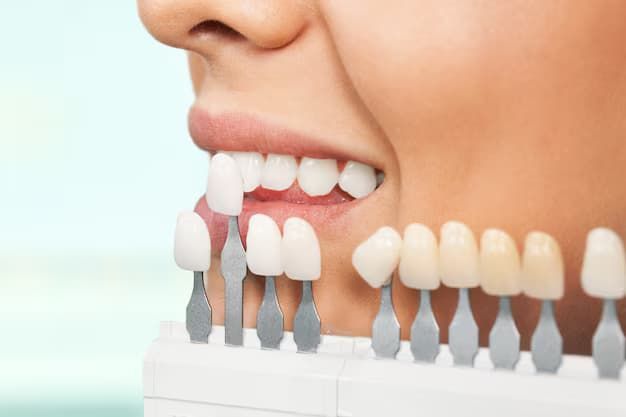
They can. An implant crown is designed to match nearby teeth in shape, size, and color. The final appearance also depends on careful planning and the health of the surrounding tissues.
What happens if a dental implant fails?
Implant failure can happen because the implant doesn't integrate properly with the bone, infection develops, excessive forces affect the area, or another problem occurs. Pain, swelling, looseness, or changes around the implant should be checked by a dentist.