Why Does the Same Tooth Keep Breaking After It’s Been Filled, and What Can Be Done About It?
A filling fixes the damage and you go back to chewing normally. So it's frustrating when that exact same tooth starts chipping or breaking again months or years later. You fixed it once, why is it happening again?
Usually it's not a new cavity. More often, the tooth itself has gotten weaker over time, the old filling doesn't fit the way it used to, or your bite is putting more pressure on that spot than the tooth can handle.
At Crown Point Dental Care, we don't just patch the broken area and send you on your way. We try to figure out why it keeps failing, because that changes what actually needs to happen next. This is an important part of restorative dentistry in Columbus, especially when a tooth has already needed multiple repairs.
Why Does a Filled Tooth Keep Breaking?
A filling repairs the damaged part, but it doesn't necessarily bring the tooth back to full strength. Once a good chunk of the natural tooth is gone, whatever's left has to work harder just to hold up under normal biting.
Big fillings are especially prone to this. Less natural tooth around the restoration means more stress on what remains every time you bite down. That stress adds up over years and eventually shows up as a crack or a broken piece.
Where the filling sits matters too. Molars take a beating from chewing, especially with hard or crunchy food. Once a restoration wears down or the seal around it breaks, the tooth is exposed again. This is part of why restorative dentistry in Columbus often means looking past the broken spot itself, the real question is how much healthy tooth is left to work with, and what's been driving the damage.
Could the Filling Itself Be the Problem?
Sometimes, yeah. Fillings hold up well, but they don't last forever. They wear down, chip, or loosen at the edges over time.
Once that happens, bacteria can sneak in around the edges and start new decay underneath. A filling that's shifted slightly can also throw off how your teeth meet, adding pressure in a spot that wasn't built for it.
That's not necessarily a sign anything was done wrong originally, years of chewing and temperature changes take a toll, and bites shift naturally over time too. When we look at a tooth that keeps breaking, we check the filling and the tooth around it, not just the crack itself.
When Does a Crown Make More Sense Than Another Filling?
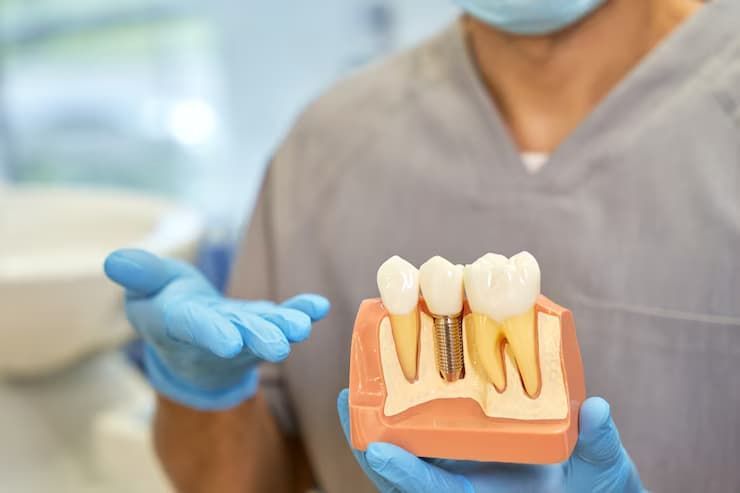
Once a tooth has lost too much of its natural structure, another filling might not hold. A crown works differently, instead of patching one spot, it covers the whole visible part of the tooth, spreading out the force of biting so no single weak point takes the full hit.
This tends to come up when a tooth already has a large filling, visible cracks, or walls that are noticeably thin. That said, not every damaged tooth needs a crown, plenty can still be handled with a filling or a smaller repair. The goal with restorative dentistry in Columbus is always to keep as much of your real tooth as possible while giving it enough backup to actually function.
What About a Cracked Tooth?
Cracks are trickier than a simple chip. Some stay near the surface. Others run deep enough to reach the nerve or drop below the gumline.
You might feel pain when you bite, sharp sensitivity to hot or cold, or a discomfort that comes and goes for no clear reason.
Some cracks barely cause symptoms at first, which is part of what makes them sneaky.
If a crack reaches the nerve, a root canal may need to happen before the tooth can be restored at all. Not every crack is fixable, some go too deep and the tooth has to come out. Catching it early gives you more options, and that's a big part of what restorative dentistry in Columbus is actually about: figuring out what's salvageable before it's too late to save.
What Does Treatment Actually Involve?
It starts with a look, checking the bite, testing sensitivity, and taking X-rays when needed. That tells us whether we're dealing with decay, a failing filling, a crack, or something deeper.
From there, it might be as simple as swapping out an old filling. Or the tooth might need a crown for more support. If the nerve's involved, a root canal comes first, then the final restoration goes on.
At Crown Point Dental Care, we walk you through what we found and why we're suggesting a particular option, factoring in the rest of your mouth and not just the one tooth in front of us.
How Can You Prevent the Same Tooth From Breaking Again?
You can't prevent every fracture, but a few habits go a long way:
- Brush twice a day and clean between your teeth daily
- Keep up with regular dental visits so small issues get caught early
- Skip the ice-chewing and hard candy
- Mention any pain, sensitivity, or bite changes right away
- Ask about a night guard if you grind or clench
- Follow the care instructions after any new filling or crown
If you've already got a heavily restored tooth, staying on top of checkups matters even more. Regular restorative dentistry in Columbus can help monitor vulnerable teeth and address small changes before they develop into bigger problems.
Conclusion
A tooth that keeps breaking after a filling usually needs more than another filling. It could be weakened structure, a failing restoration, a crack, or pressure from grinding.
At Crown Point Dental Care, we look at the full picture before deciding what's next, a new filling, a crown, a root canal, or some combination, depending on what's actually going on. That's the core of good restorative dentistry in Columbus: not just fixing what broke today, but figuring out why, so it doesn't happen again.
If the same tooth keeps giving you trouble, it's worth finding out why instead of just patching it one more time.