Can Porcelain Veneers Fix Deep Stains and Gaps Better Than Teeth Whitening?
A brighter smile can improve confidence, professional interactions, and daily comfort in social settings. Many people feel frustrated when whitening products fail to remove dark stains or when small gaps continue to affect the appearance of otherwise healthy teeth. In situations like these, veneers are often considered a more complete cosmetic solution. Patients searching for porcelain veneers in Columbus frequently want to know whether veneers provide better results than traditional whitening treatments.
Teeth whitening is designed to lighten surface discoloration, while veneers cover the visible front portion of teeth to improve shape, color, spacing, and symmetry at the same time. Both treatments have advantages, but they solve very different dental concerns.
Understanding the Difference Between Whitening and Veneers
Professional whitening treatments work by breaking down stain molecules inside the enamel. This approach is effective for yellowing caused by coffee, tea, wine, tobacco, or aging. Whitening can noticeably brighten healthy teeth when discoloration is mild or moderate.
However, deep stains are often more difficult to remove. Certain medications, trauma, excessive fluoride exposure, or enamel damage can create discoloration beneath the surface of the tooth. In these cases, repeated whitening sessions may produce uneven or disappointing results. Many patients considering porcelain veneers in Columbus are dealing with stains that no longer respond to whitening products.
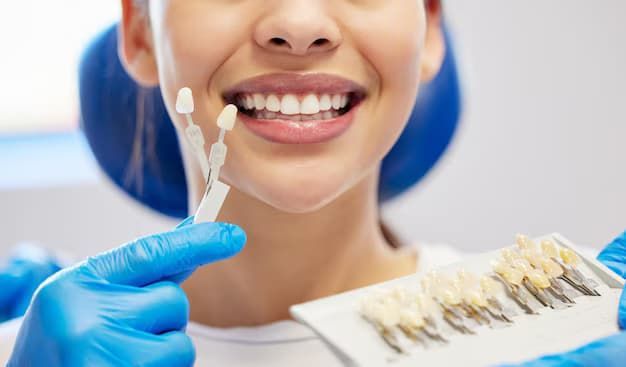
Veneers are thin porcelain shells custom-made to fit over the front surface of teeth. Since the porcelain covers the visible enamel, veneers can hide dark stains completely instead of trying to bleach them away. This creates a more consistent appearance that often lasts much longer than whitening results.
Why Deep Stains Often Require More Than Whitening
Not every type of tooth discoloration can be removed with bleaching treatments. Deep stains often develop beneath the enamel, making them much harder to improve with whitening alone.
- Internal Discoloration: Gray, brown, or blue-toned stains usually sit deeper inside the tooth.
- Uneven Whitening Results: Some teeth respond poorly even after multiple treatments.
- Longer-Lasting Coverage: Veneers conceal stubborn stains with a more uniform appearance.
At Crown Point Dental Care, many patients explore veneers after years of unsuccessful whitening attempts. This is why porcelain veneers in Columbus are often chosen for long-term cosmetic improvement instead of temporary brightness.
Can Veneers Fix Gaps More Effectively?
Whitening treatments cannot change the spacing or alignment of teeth. Even after successful bleaching, gaps between teeth may still remain noticeable. Veneers, on the other hand, can reshape the visible width of teeth and close small to moderate spaces without orthodontic treatment.
For patients with minor gaps, veneers may create a straighter and more balanced smile in fewer visits than braces or aligners. The porcelain shells are carefully shaped to improve proportion while maintaining a natural appearance.
People exploring porcelain veneers in Columbus often appreciate that veneers can address multiple concerns at once, including stains, uneven edges, worn enamel, and gaps. This combination approach is one of the biggest differences between veneers and whitening alone.
Natural Appearance Matters
Many patients worry that veneers might appear too bright or artificial. Modern porcelain is carefully designed to mimic the way natural enamel reflects light for a more realistic look.
- Customized Appearance: Shape, size, and shade are tailored for each smile.
- Balanced Smile Design: Focus remains on harmony, not overly white results.
- Multi-Concern Solution: Veneers improve color, shape, and minor damage together.
At Crown Point Dental Care, planning focuses on natural-looking results that feel comfortable and balanced. This is why many patients choose porcelain veneers in Columbus when whitening alone cannot achieve the desired appearance.
How the Veneer Process Is Planned for Long-Lasting Results
Creating veneers involves more than simply placing porcelain shells over teeth. The process begins with a detailed evaluation of tooth structure, gum health, bite alignment, and cosmetic goals. Digital imaging and shade selection help create veneers that match facial features and natural smile proportions.
Temporary veneers may sometimes be used before final placement to ensure comfort and appearance. Patients considering porcelain veneers in Columbus often appreciate that treatment is highly customized rather than one-size-fits-all. Careful planning improves durability, comfort, and the overall natural appearance of the final result for many years.
Daily Habits That Help Veneers Stay Bright and Strong
Porcelain veneers are durable, but long-term success still depends on healthy daily habits. Brushing twice a day, flossing regularly, and attending routine dental visits help protect both veneers and surrounding natural teeth. Avoiding excessive pressure from nail biting, chewing ice, or using teeth as tools can reduce the risk of damage. Although porcelain resists stains better than enamel, limiting tobacco use and dark-colored beverages may still help maintain brightness. Patients choosing porcelain veneers in Columbus are usually encouraged to wear a nightguard if teeth grinding or clenching creates unnecessary pressure during sleep.
Durability and Long-Term Results
Many patients want a solution that stays bright without frequent touch-ups. Whitening can fade over time, while veneers are designed to maintain their appearance longer.
- Stain Resistance: Porcelain is less porous and resists discoloration better than enamel.
- Long-Term Results: Veneers can last for years with proper care and hygiene.
- Consistent Appearance: Color and shape are customized before placement for predictable results.
Patients choosing porcelain veneers in Columbus often prefer their durability and reliability. With regular care and dental visits, veneers provide a stable, long-lasting improvement compared to temporary whitening treatments.
Whitening Still Has an Important Role
Although veneers offer several advantages, whitening remains an excellent treatment for many patients. Healthy teeth with mild to moderate staining often respond very well to professional bleaching procedures. Whitening is also less invasive and generally costs less upfront than veneers.
The best treatment depends on the condition of the teeth, the type of discoloration, and the desired outcome. Some patients even combine whitening with veneers to create a more balanced overall smile.
Individuals comparing whitening and porcelain veneers in Columbus should focus on long-term goals instead of choosing based only on convenience or temporary trends.
Conclusion
Deep stains and visible gaps can affect confidence in ways that simple whitening treatments may not fully address. While whitening remains effective for many types of surface discoloration, veneers provide a more complete cosmetic solution for patients dealing with stubborn stains, spacing issues, or uneven tooth appearance.
Porcelain veneers can dramatically improve smile symmetry, brightness, and overall balance while offering longer-lasting results. Patients exploring porcelain veneers in Columbus often discover that veneers provide greater flexibility and predictability than whitening alone, especially when multiple cosmetic concerns need to be corrected together.